
As wildfire risk continues to rise, securing affordable, comprehensive homeowners insurance coverage has become a major challenge for many California residents.
But in a move that some interpret as a positive shift, Farmers Insurance has announced it will eliminate the cap on the number of homeowners insurance policies it offers in the state.
Since July 2023, Farmers has been restricting the number of new policies it issues in the state, most recently capping them at 9,500 per month.
“By removing the cap on offering new homeowners policies, Farmers is doubling-down on its commitment to California homeowners, expanding choice and availability for consumers across the state,” Behram Dinshaw, president of personal lines for Farmers Insurance, said in a press release.
“This is a great sign and exactly what we’ve been waiting for,” insurance expert Karl Susman, owner of Susman Insurance Agency in Los Angeles, tells Realtor.com®. “This will put enormous pressure on the rest of the industry, because they don’t want to lose out on the business that Farmers is now going after—which means options will increase and hopefully prices will eventually decrease.”
However, that could take some time.
“Even as some insurers begin writing new policies again, the underlying risk environment hasn’t improved enough to meaningfully lower premiums,” warns Hannah Jones, senior economic research analyst at Realtor.com.
Help for ‘wildfire-distressed areas’
Farmers has also submitted a new rating plan that incorporates key components of the Sustainable Insurance Strategy—designed to help stabilize California’s insurance market—and the insurer is projected to generate several thousand new policies in areas the California Department of Insurance considers “distressed.”
“Farmers says they’ll even begin marketing to and specifically targeting approximately 300,000 consumers in those distressed areas,” says Susman. “That’s huge.”
According to the California Department of Insurance, “wildfire-distressed areas” are places where wildfires are more likely to happen and it is hard for consumers to find insurance coverage except from the FAIR Plan, the state’s insurer of last resort.
“With fewer companies willing to underwrite coverage, homeowners in vulnerable regions often face limited options or must rely on the more expensive FAIR Plan,” adds Jones.
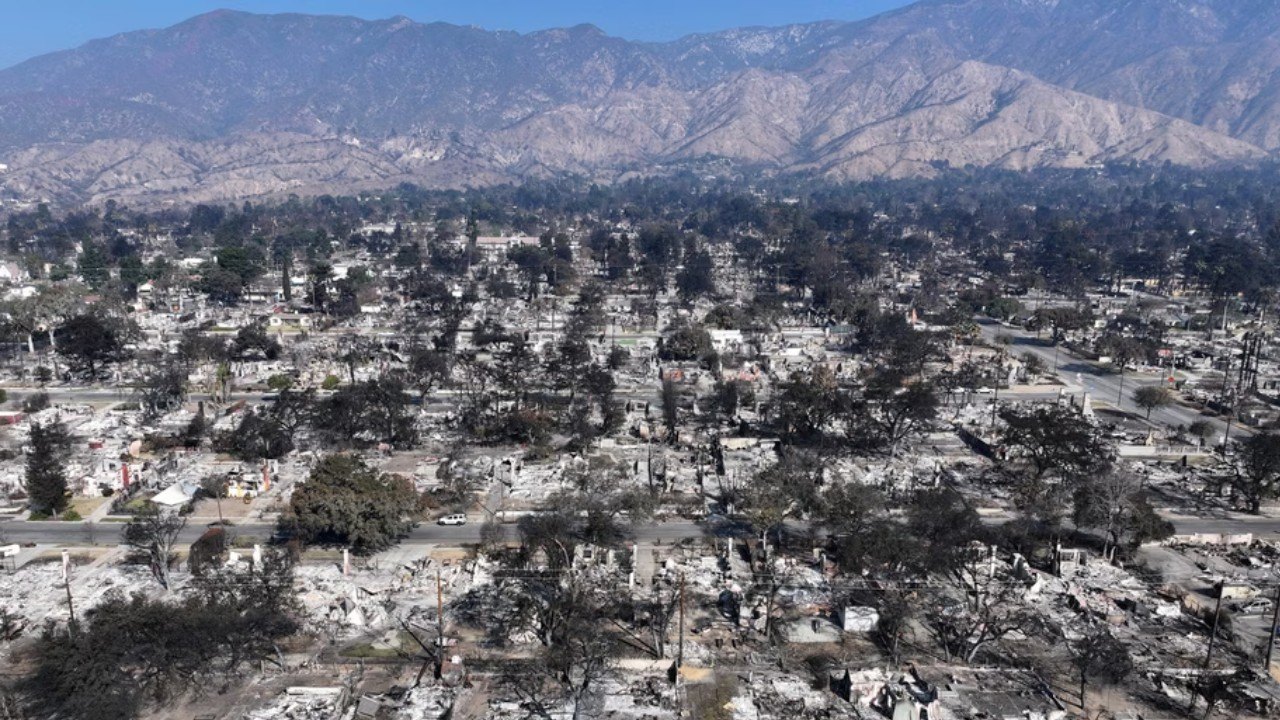
After the catastrophic Palisades fire and the Eaton fire in January—which destroyed more than 12,600 homes and caused total property and capital losses ranging between $76 billion and $131 billion, according to the UCLA Anderson Forecast—the FAIR Plan saw the number of policies on its books skyrocket.
The plan now covers nearly 591,000 policyholders statewide as of June, almost double its enrollment in 2021, according to a Los Angeles Times analysis.
But some homeowners are currently suing the FAIR Plan, claiming that smoke damage from the wildfires isn’t being covered.
“With more insurers coming back to market, there’s no question that homeowners will jump ship from the FAIR Plan and go get more coverage for less money elsewhere, as they should,” says Susman.
California’s insurance challenges
Even before the historic 2025 wildfires, it had become harder for California homeowners to secure insurance in the state.
California remains at the forefront of climate-related vulnerability. The Realtor.com 2025 Climate Risk Report found that 5.6% of U.S. homes—worth $3.2 trillion—face severe or extreme wildfire risk, and nearly 39% of that value is in California.
Among all the metros in the Golden State, Los Angeles ($476.5 billion), Riverside ($474.4 billion), and San Francisco ($274.6 billion) have the highest combined value of homes that have an increased likelihood of being destroyed in a wildfire in the next 30 years.
“Many insurers have also limited coverage or left the state altogether, reducing competition and driving prices even higher,” says Jones.
State Farm and the Hartford stopped writing new policies in the state over growing natural disaster risks.
Allstate had paused issuing new California policies in late 2022, but it has promised to resume writing policies in the future.
In addition to ceasing the writing of new policies, several insurers have terminated coverage for longtime policyholders to curb their risk.
“In general, home insurance is getting much more expensive and harder to access in high-risk areas affected by extreme weather like hurricanes, flooding, and wildfires,” Max Dugan-Knight, a climate data scientist at Deep Sky Research, tells Realtor.com. “Insurers are abandoning the highest-risk parts of the country because the risks are growing too quickly for them to correctly price it.”
Deep Sky Research finds that 1 in 5 homes located in the most extreme fire risk areas in California has lost insurance coverage since 2019, while premiums in these areas have climbed 42% since 2009. More than 150,000 households in these regions are now uninsured.
According to Jones, California homeowners face such high insurance premiums because insurers have raised rates to keep up with soaring wildfire losses, rising rebuilding costs, and inflation.
At least 13% of real estate agents in California had a sales transaction canceled due to their clients not being able to find insurance in 2024 alone, according to the California Association of Realtors.
Claire O’Connor, a Los Angeles real estate agent who lost her own home in the Palisades fire, told Realtor.com that one of her clients was quoted an astounding $40,000 to $50,000 for an insurance policy in Los Feliz.
Sam Fitz-Simon, a real estate agent with Compass in Danville, CA, has also had a buyer decide not to pursue a property due to sky-high premiums.
“With insurance costs continuing to increase, I do expect that this will remain a factor that all California homebuyers consider,” he adds.
Committed to California
Dinshaw said that Farmers is “committed to doing our part to continue improving the insurance marketplace in the state.”
But it comes at a cost: Farmers has asked for state approval to raise home insurance rates by an average of 6.99%
“However, they’ve also proposed an updated discount for customers who choose to bundle their home and auto insurance with Farmers, going from 15% to 22%,” says Susman.
New customers will also be required to meet all applicable underwriting guidelines to be considered for coverage.
According to the California Department of Insurance, Mercury Insurance, CSAA, USAA, Pacific Specialty, and California Casualty have all announced plans to “stay and grow in the state.”
“They’ve been writing policies this whole time—especially Mercury,” says Susman. “But since Farmers is back, they’ll probably ramp up even more.”
Susman applauds Farmers for taking the lead.
“They get a lot of accolades from me, because it takes a lot of guts to be the first back to market,” he says. “Now that the cap has been lifted, this is going to open the floodgates up for people to get quotes and get insurance policies again, finally.”